10 Surprisingly Powerful Projects You Can Build with Raspberry Pi
...and why it’s no longer just for tinkerers
For years, the Raspberry Pi carried the reputation of being a low-cost board for classroom coding exercises, blinking LEDs, and retro gaming projects. While that may have been true in its early days, the platform has since grown into one of the most versatile, affordable, and underestimated development tools available today.
With the release of newer Pi models—combined with an ever-growing ecosystem of add-on boards, software frameworks, and community support—the Raspberry Pi has moved well beyond hobby tinkering. It is now being used for industrial prototyping, AI deployment, automation, and even lab research.
Below, we’ll walk through 10 surprisingly powerful projects you can build with Raspberry Pi—covering real-world applications, design tips, and the hardware/software stack needed to make them successful.
1. Edge AI Object Detection
AI at the edge no longer requires large GPUs or expensive cloud subscriptions. With Raspberry Pi 4 or Pi 5, paired with accelerators like Google Coral TPU or the Hailo-8 M.2 module, you can run real-time inference locally.
Using frameworks such as:
TensorFlow Lite
YOLOv5 via OpenCV
MediaPipe
…you can create systems that detect faces, track movement, recognize license plates, or identify specific objects on the fly.
Practical applications include:
Wildlife detection cameras that operate without an internet connection
Real-time object counters for factories and retail spaces
Smart parking systems capable of license plate recognition
The Pi’s affordability means AI solutions that once required cloud subscriptions can now run entirely offline, improving both privacy and reliability.
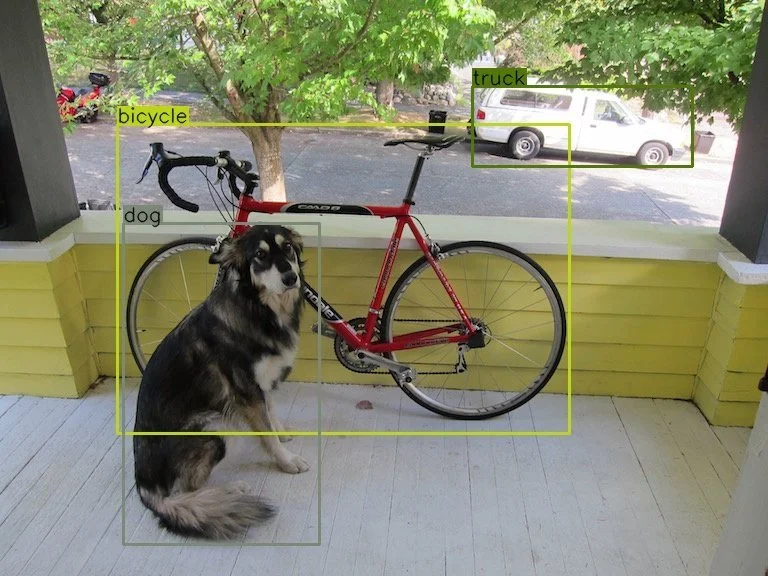
Object detection example of a dog, bicycle, and a truck.
2. Industrial Data Logger with RS-485
Legacy systems aren’t going away anytime soon. Many industrial sensors, HVAC units, and PLCs still rely on RS-485 communication—a protocol the Raspberry Pi can handle with the right HAT or interface.
With Python libraries like minimalmodbus or pymodbus, Raspberry Pi can act as a:
Data logger for temperature, humidity, or energy meters
Protocol bridge between Modbus RTU and MQTT
Diagnostic tool for troubleshooting legacy equipment
Example use case: A Pi-based Modbus logger installed in a warehouse can continuously track environmental conditions and push the data to an IoT dashboard, making monitoring both affordable and scalable.
For developers and engineers, boards like the Top HAT combine RS-485 with GPIO expansion, ADCs, and power management—making industrial prototyping faster and more reliable.
3. Home Automation Gateway
Commercial smart home hubs often come with vendor lock-in and cloud dependency. Raspberry Pi, running Home Assistant or OpenHAB, gives you full control of your smart home—without giving up privacy.
A Pi-based hub allows you to:
Control Zigbee, Z-Wave, BLE, and Wi-Fi devices from one interface
Automate lights, HVAC, security systems, and appliances
Run all automations locally, ensuring they still work without internet
Optionally integrate with Alexa or Google Assistant
This approach keeps ownership of your data and rules in your hands. Many enthusiasts now prefer Raspberry Pi as the backbone of their privacy-first smart homes.
4. Personal Private Cloud
Want your own secure alternative to Google Drive or Dropbox? With a Raspberry Pi, you can deploy a full private cloud solution.
Popular tools include:
Nextcloud for file syncing, document editing, and collaboration
Pi-hole to block ads and trackers across your network
WireGuard or Tailscale for encrypted remote access
Apache or Nginx for hosting personal websites or dashboards
Pair your Pi with a USB 3.0 SSD or an M.2 expansion to increase both speed and storage capacity. The result is a compact, self-hosted server that protects your data while remaining accessible from anywhere.
5. Retro Gaming Console
One of the most famous Pi projects is retro gaming, but it has grown far beyond NES emulation. With distributions like RetroPie and Batocera, you can emulate systems including:
NES, SNES, and Sega consoles
PlayStation 1
Game Boy and Game Boy Advance
Select N64 and PSP games (on Pi 4/5)
Hobbyists frequently 3D print cases, build handheld consoles, or even design full arcade cabinets around Raspberry Pi hardware—blending nostalgia with modern DIY design.

Screen shoot of Pac-Man game play.
6. Environmental Monitoring Station
Raspberry Pi is ideal for scientific data logging thanks to its low power requirements, GPIO access, and compatibility with sensors.
With sensors like the DHT22 (temperature/humidity), BMP180 (barometric pressure), MQ135 (air quality), and soil moisture probes, you can build:
Greenhouse monitoring systems
Pollution and air quality studies
Microclimate weather stations
Smart agriculture tools
By adding LoRa radios or cellular modules, Pi-based stations can transmit data from remote or off-grid environments, powered by solar panels and batteries.
7. Wildlife or Security Camera
Raspberry Pi with a camera module or USB webcam can function as a smart surveillance system.
Capabilities include:
Streaming video via MJPEG or RTSP
Recording when motion is detected
Uploading clips to a NAS or personal server
Capturing time-lapse sequences over long periods
Adding OpenCV or TensorFlow allows you to filter motion events by object type—meaning your system can ignore false triggers from pets or wind-blown branches while alerting you only to relevant movement.

Security footage example
8. Digital Signage Display
Raspberry Pi has become a go-to replacement for dedicated signage controllers. Its fanless design, small size, and affordability make it ideal for commercial installations.
Software options like Screenly, InfoBeamer, and Yodeck let you run:
Storefront advertisements
Restaurant menu boards
Conference/event screens
Real-time business dashboards
This approach reduces cost while providing a flexible, scalable signage system.
9. Lab Automation and Test Bench Control
In labs and test environments, Raspberry Pi shines as a bridge between software and physical hardware.
Through GPIO, I²C, and SPI, you can:
Automate calibration procedures
Build functional test stations for electronics
Perform power cycling during endurance testing
Collect analog and digital data with add-on ADC/DAC boards
The ability to control equipment directly from Python scripts or shell commands makes Raspberry Pi an invaluable tool for engineers and researchers.
10. Offline AI Chatbot Assistant
Running AI models locally is now possible thanks to Raspberry Pi 5’s improved hardware. By leveraging lightweight frameworks such as Llama.cpp, Ollama, or GPT4All, you can create an offline AI assistant that:
Recognizes voice commands with Whisper
Responds through text or voice output
Assists with coding, research, and automation tasks
Runs entirely without an internet connection
This setup provides a private alternative to cloud AI assistants, with enough capability for productivity, coding support, and lightweight conversational tasks.
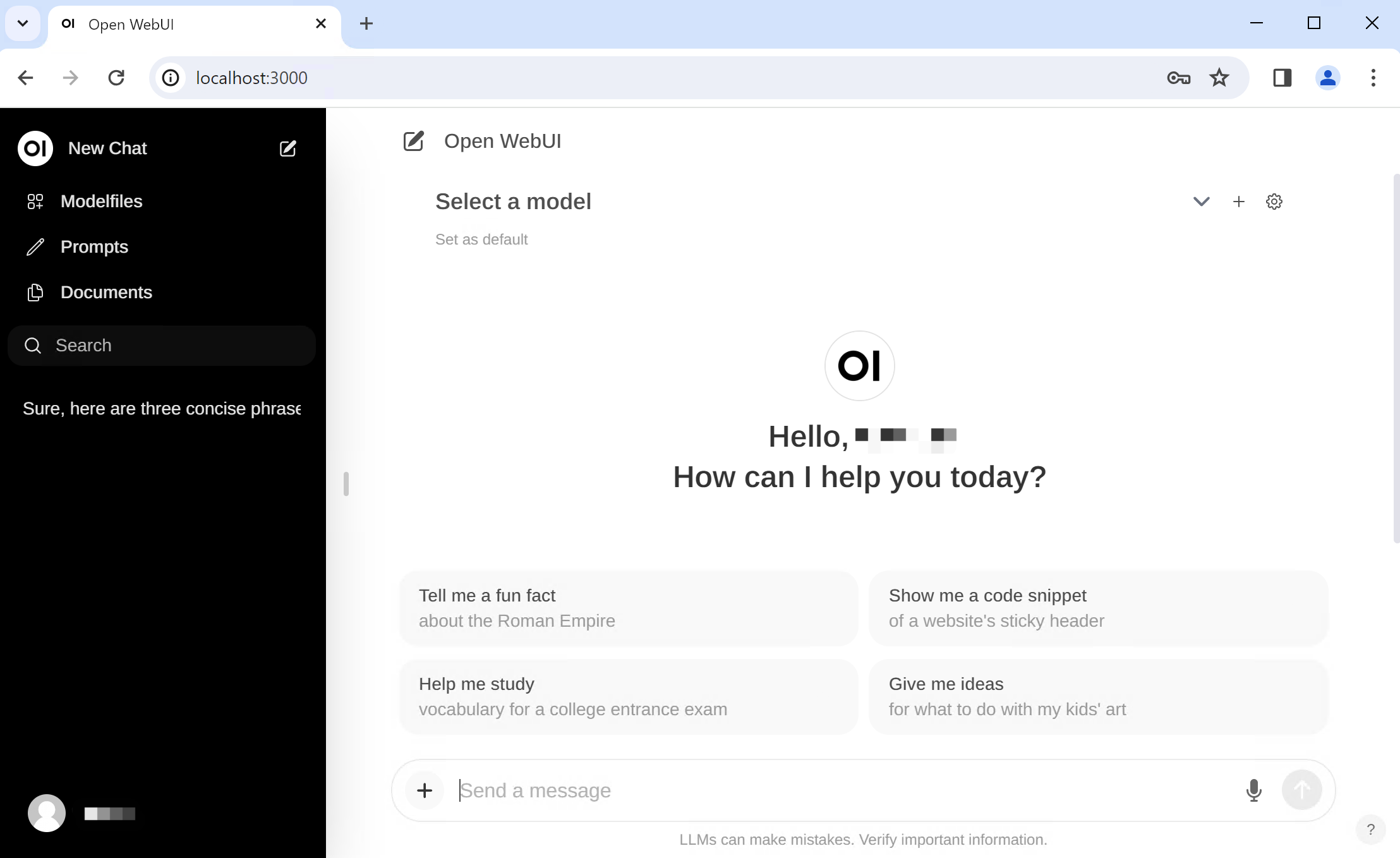
Screen shot of Ollama web UI
Bonus: Expand Raspberry Pi’s Capabilities
Out of the box, Raspberry Pi has limitations—such as no built-in analog inputs, limited GPIO, and no RS-485 interface. Expansion boards like the Top HAT address these gaps by adding:
Extra GPIO expanders
RS-485 communication for industrial use
ADC channels for sensor inputs
A USB hub for peripheral management
Power path management with battery support
Instead of juggling multiple add-ons, you get a single, integrated board that transforms Raspberry Pi into a rugged prototyping platform.
Final Thoughts
Raspberry Pi has evolved from a teaching tool into a serious platform for prototyping and product development. From edge AI and automation to environmental science and industrial integration, it enables projects once limited to high-budget labs or enterprises.
Whether you’re an engineer building an MVP, a researcher monitoring field data, or a maker experimenting with AI, Raspberry Pi provides the flexibility, scalability, and affordability to bring ideas to life.
With the right hardware expansions, you’re not just building projects—you’re building solutions.