
Z-Wave vs Zigbee vs WiFi: Which Smart Home Protocol Is Best?
When building a smart home, one of the most important decisions is choosing the right wireless protocol. Most smart home devices communicate using one of three technologies:
Z-Wave
Zigbee
WiFi
These wireless standards power everything from smart lights and door locks to motion sensors and cameras. While they may appear similar, each protocol is designed for different types of smart home devices.
Understanding the differences between Z-Wave vs Zigbee vs WiFi will help you build a more reliable, responsive, and scalable smart home system.
What Is a Smart Home Protocol?
A smart home protocol is the wireless communication method that allows devices to talk to each other and to a central hub.
For example, when a motion sensor detects movement, it sends a signal to:
Turn on lights
Trigger a camera
Send a phone notification
The protocol determines how fast, reliable, and energy-efficient that communication is.
The three most common protocols used in modern smart homes are:
ProtocolNetwork TypeBest Smart Home DevicesZ-WaveMeshLocks, switches, security sensorsZigbeeMeshSmart bulbs, motion sensorsWiFiDirect router connectionCameras, speakers, video doorbells
Z-Wave for Smart Homes
Z-Wave is one of the most reliable wireless technologies for home automation. It operates in the 900 MHz frequency range, which allows signals to travel through walls more easily than WiFi.
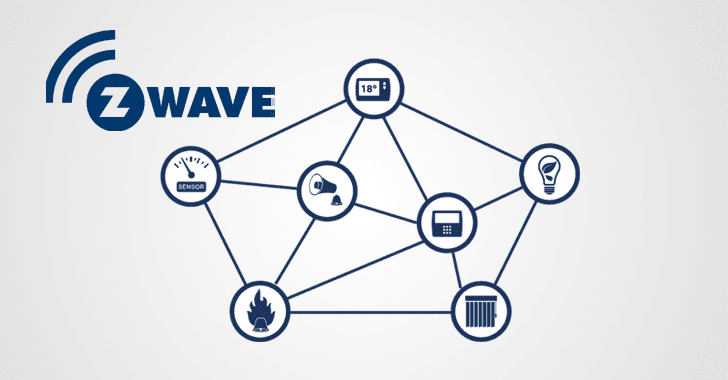
Z-Wave devices create a mesh network, meaning devices can relay signals between each other. Every powered device helps strengthen the network.
For example:
A door sensor in the garage can send its signal through a hallway light switch before reaching the hub.
Advantages of Z-Wave in Smart Homes
Very reliable communication
Less interference from WiFi networks
Strong wall penetration
Long battery life for sensors
Strict device compatibility standards
Common Z-Wave Smart Home Devices
Typical Z-Wave devices include:
Smart door locks
Motion sensors
Smart switches
Alarm sensors
Thermostats
When to Use Z-Wave
Z-Wave is ideal for core home automation and security systems where reliability is critical.
It is particularly useful for:
Door locks
Alarm sensors
Garage door controllers
Light switches
Because Z-Wave operates outside the 2.4 GHz band, it performs well in homes with heavy WiFi usage.
Zigbee for Smart Homes
Zigbee is another popular smart home wireless protocol designed for low-power IoT devices and sensor networks.
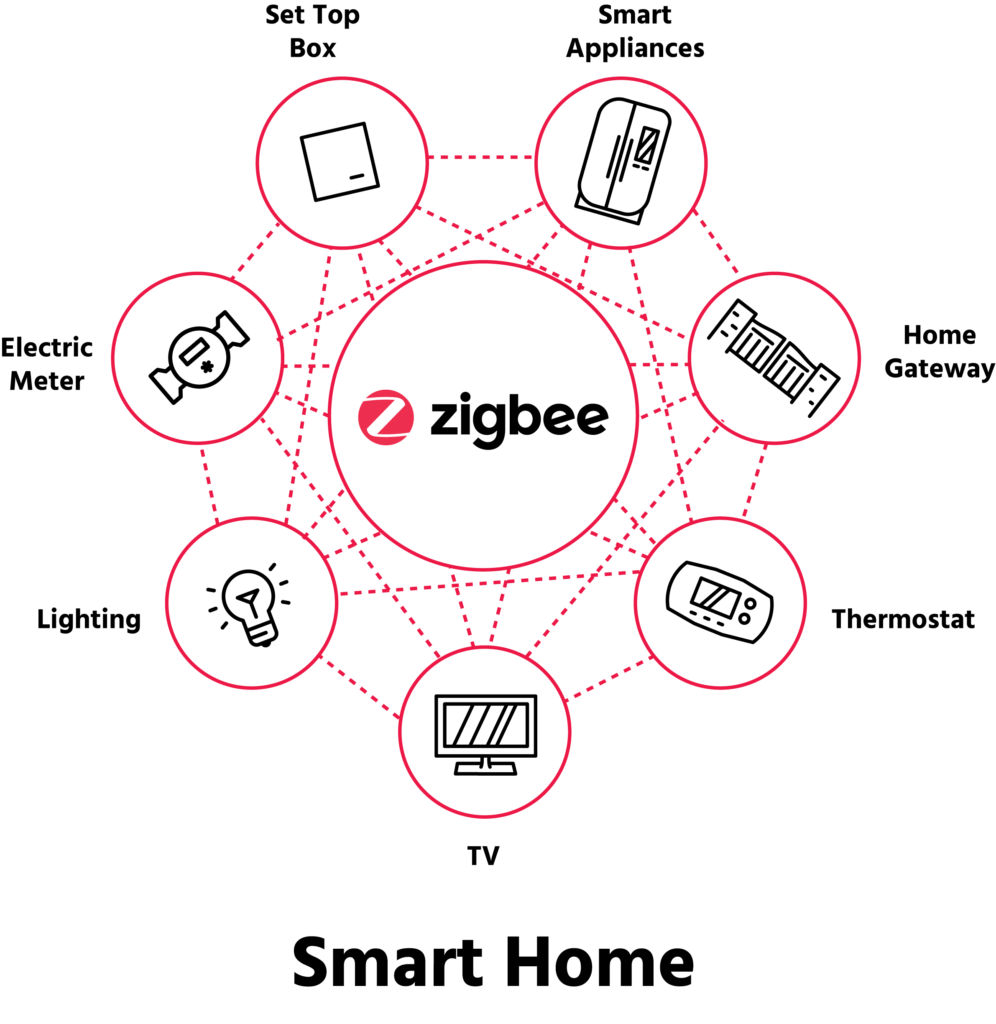
Like Z-Wave, Zigbee also uses a mesh networking architecture, allowing devices to relay signals through the network.
Zigbee networks include three device types:
Coordinator (hub)
Routers (powered repeaters)
End devices (battery-powered sensors)
This design allows Zigbee networks to support hundreds of connected devices.
Advantages of Zigbee in Smart Homes
Extremely low power consumption
Large mesh network support
Fast device response times
Widely used by smart lighting manufacturers
Common Zigbee Smart Home Devices
Zigbee is frequently used for:
Smart bulbs
Motion sensors
Temperature sensors
Smart plugs
Environmental monitors
When to Use Zigbee
Zigbee is ideal when your smart home includes many sensors or lighting devices.
Typical Zigbee deployments include:
Whole-home smart lighting
Occupancy sensors
Environmental monitoring
Energy management
Large smart homes often rely on Zigbee because it scales well to large networks.
WiFi Smart Home Devices
WiFi is the most familiar wireless technology used in smart homes. Unlike Zigbee and Z-Wave, WiFi devices connect directly to your router rather than forming a mesh network.
WiFi provides much higher bandwidth, making it ideal for devices that transmit large amounts of data.

Advantages of WiFi in Smart Homes
High-speed data transmission
Direct internet connectivity
Easy setup without a hub
Supports firmware updates and cloud services
Common WiFi Smart Home Devices
WiFi is commonly used for devices that require high bandwidth, such as:
Security cameras
Video doorbells
Smart speakers
Smart TVs
Voice assistants
When to Use WiFi
WiFi works best for devices that require:
Video streaming
Audio streaming
Cloud connectivity
Firmware downloads
However, WiFi devices usually consume more power, which makes them less suitable for battery-powered sensors.
Z-Wave vs Zigbee vs WiFi: Smart Home Comparison
FeatureZ-WaveZigbeeWiFiNetwork typeMeshMeshRouter-basedPower consumptionVery lowVery lowHighFrequency~908 MHz2.4 GHz2.4 / 5 GHzHub requiredYesYesNoBest forSecurity devicesSensors & lightingCameras & streaming
Each protocol fills a different role in a smart home ecosystem.
The Best Smart Homes Use Multiple Protocols
Most advanced smart homes combine Z-Wave, Zigbee, and WiFi rather than relying on just one technology.
A typical setup might include:
Z-Wave Devices
Smart locks
Alarm sensors
Smart switches
Zigbee Devices
Smart bulbs
Motion sensors
Temperature sensors
WiFi Devices
Cameras
Smart displays
Voice assistants
A central automation hub such as Home Assistant or another smart home controller manages all these devices.
Final Thoughts: Choosing the Best Smart Home Protocol
When comparing Z-Wave vs Zigbee vs WiFi, the best choice depends on the type of device and how it will be used.
Z-Wave is best for reliable home automation and security devices
Zigbee is ideal for large networks of sensors and lighting
WiFi works best for high-bandwidth devices like cameras and speakers
The most reliable smart homes combine all three technologies to create a fast, scalable, and resilient automation network.